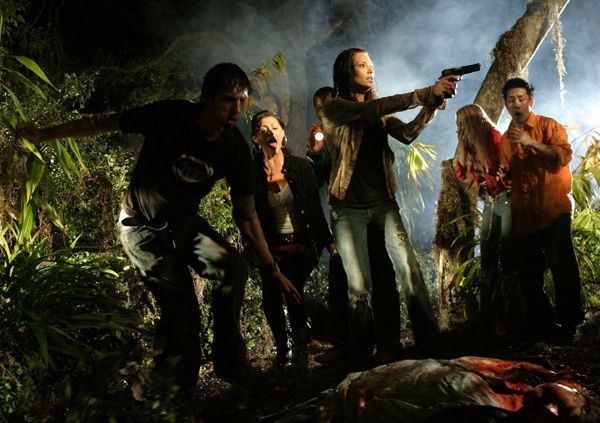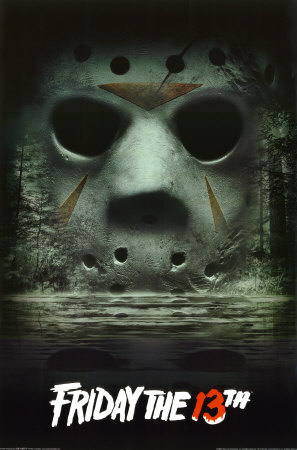
Friday The 13th was directed by Marcus Nispel and stars Derek Mears as Jason.
This movie is NOT a remake of the original Friday (1980). I went into the movie assuming it was just another retread in the spirit of Rob Zombie's Halloween (2008), and was quite grateful it wasn't.
(By the way, watch the first fifteen minutes of Halloween, then throw it out and watch the original. There's a bit of interesting characterization for Michael Myers in the intro, then absolutely nothing else worth watching. I can't believe H2: Halloween 2 (2009) comes out this year. Rob Zombie's only good movie was The Devil's Rejects (2005).)
Anyway, I wasn't expecting much of the new Friday as a result. However, it picks up where the first left off, working as a sequel. I was glad they didn't attempt a remake, however, this creates problems for me, as does H2. If one makes sequels of the original, don't they then overlap with the existing sequels, cancelling them out? (And how could one ever cancel out Jason X (2001) aka "Jason in Space"?)
Besides the elimination of some good entertainment, it creates a problem. I'm not saying that Jason X is art, necessarily, but one can't simply eradicate so much material without creating weak spots in the canon, for the newer movies will unavoidably be informed by the older sequels. They're building on the foundation they are denying.
It strikes me as being a bit too close to fanfiction, or just fandom wish fulfilment, that if one can just ignore the pesky sequels, one can deny the basic cheesiness of the genre. This just doesn't work. Look at Prom Night (2008). By ignoring the source material, they alienated the built-in base of series fans. Conversely, the result was still too of the genre to be enjoyed by casual viewers. They got the worst of both worlds, and created a bomb the horror world views with shame.
However, the movie itself was entertaining, if uneven. It opens with the ending of the original, then shifts into modern day. A group of teens are camping near Chrystal Lake, they are stalked and killed, ect. The thing is, the killings are going too fast. No one will be left to finish out the movie. After twenty minutes, everyone is dead. However, this is really just the first act. ANOTHER group of teens (you'd think they'd start running out) go camping, joined by the brother of one of the girls, who's been kept alive by Jason because she looks like his mother.
The first movie could have been cut out, really, because it really functions mostly as clutter. The whole first twenty minutes could have been reduced into a flashback montage. I felt like the first act was mostly time filler, when I really wished they had used that time to elaborate upon the later killings.
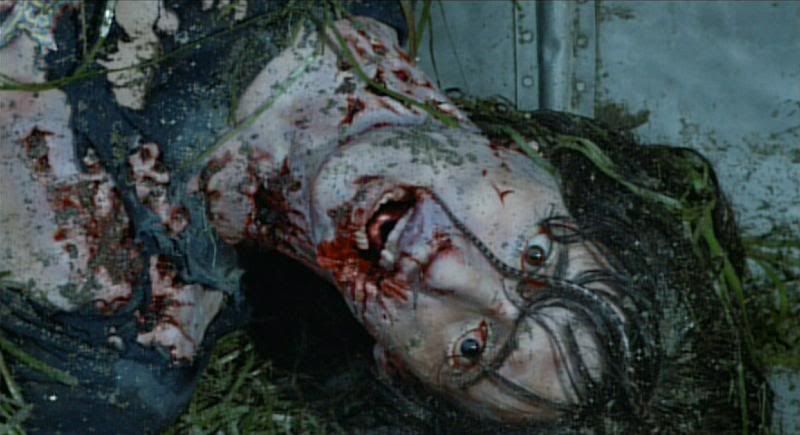
Accordingly, gorehounds will be vastly disappointed. This movie does not try to top itself in any manner. I really think that, in this respect, it was written by someone who knew the conventions of the genre, but didn't really understand the purpose. Yes, people are supposed to be picked off one by one, but the draw is how this occurs. If everyone is chased all around for a few minutes, then stabbed, there is no reason to watch. One girl is burned alive, but when the camera focuses in on her face, she just has a few scrapes on her cheeks. It just doesn't make sense.
The lighting is so dark, as well, that one wouldn't be able to see any great effects anyway. I felt like they just didn't want to spend the money, so they just threw some Caro syrup on everybody, turned down the lights and asked them to scream. Darkness alone does not make something scary. Just look at The Burning (1981). The raft scene was done in broad daylight, yet it's really gorey and well done, especially for the Eighties.
This movie is NOT a remake of the original Friday (1980). I went into the movie assuming it was just another retread in the spirit of Rob Zombie's Halloween (2008), and was quite grateful it wasn't.
(By the way, watch the first fifteen minutes of Halloween, then throw it out and watch the original. There's a bit of interesting characterization for Michael Myers in the intro, then absolutely nothing else worth watching. I can't believe H2: Halloween 2 (2009) comes out this year. Rob Zombie's only good movie was The Devil's Rejects (2005).)
Anyway, I wasn't expecting much of the new Friday as a result. However, it picks up where the first left off, working as a sequel. I was glad they didn't attempt a remake, however, this creates problems for me, as does H2. If one makes sequels of the original, don't they then overlap with the existing sequels, cancelling them out? (And how could one ever cancel out Jason X (2001) aka "Jason in Space"?)
Besides the elimination of some good entertainment, it creates a problem. I'm not saying that Jason X is art, necessarily, but one can't simply eradicate so much material without creating weak spots in the canon, for the newer movies will unavoidably be informed by the older sequels. They're building on the foundation they are denying.
It strikes me as being a bit too close to fanfiction, or just fandom wish fulfilment, that if one can just ignore the pesky sequels, one can deny the basic cheesiness of the genre. This just doesn't work. Look at Prom Night (2008). By ignoring the source material, they alienated the built-in base of series fans. Conversely, the result was still too of the genre to be enjoyed by casual viewers. They got the worst of both worlds, and created a bomb the horror world views with shame.
However, the movie itself was entertaining, if uneven. It opens with the ending of the original, then shifts into modern day. A group of teens are camping near Chrystal Lake, they are stalked and killed, ect. The thing is, the killings are going too fast. No one will be left to finish out the movie. After twenty minutes, everyone is dead. However, this is really just the first act. ANOTHER group of teens (you'd think they'd start running out) go camping, joined by the brother of one of the girls, who's been kept alive by Jason because she looks like his mother.
The first movie could have been cut out, really, because it really functions mostly as clutter. The whole first twenty minutes could have been reduced into a flashback montage. I felt like the first act was mostly time filler, when I really wished they had used that time to elaborate upon the later killings.
Accordingly, gorehounds will be vastly disappointed. This movie does not try to top itself in any manner. I really think that, in this respect, it was written by someone who knew the conventions of the genre, but didn't really understand the purpose. Yes, people are supposed to be picked off one by one, but the draw is how this occurs. If everyone is chased all around for a few minutes, then stabbed, there is no reason to watch. One girl is burned alive, but when the camera focuses in on her face, she just has a few scrapes on her cheeks. It just doesn't make sense.
The lighting is so dark, as well, that one wouldn't be able to see any great effects anyway. I felt like they just didn't want to spend the money, so they just threw some Caro syrup on everybody, turned down the lights and asked them to scream. Darkness alone does not make something scary. Just look at The Burning (1981). The raft scene was done in broad daylight, yet it's really gorey and well done, especially for the Eighties.
Movie Itself: C+
Overall: D+